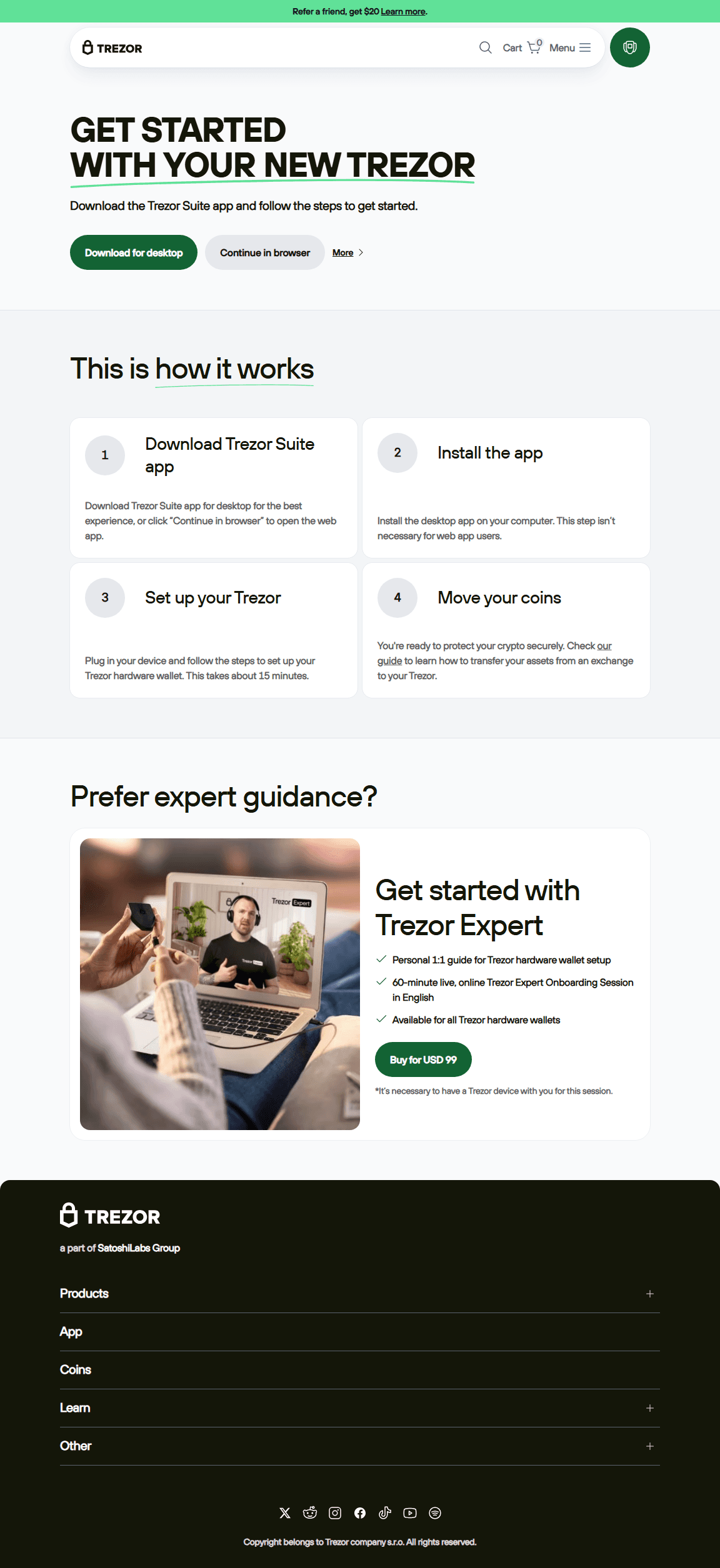
Getting Started With Trezor: A Complete Guide to Trezor.io/start
When it comes to storing cryptocurrency securely, hardware wallets remain the most trusted solution. Among these, Trezor stands out as one of the earliest and most reputable hardware wallets available. If you have just purchased a Trezor device or are planning to set one up, the official starting point is Trezor.io/start. This guide provides a clear, step-by-step explanation of what the page offers, how to begin the setup process, and what you need to know about using your device safely.
What Is Trezor?
Trezor is a hardware wallet designed to keep cryptocurrency private keys secure in an offline environment. Unlike mobile or desktop wallets connected to the internet, a hardware wallet provides an isolated, protected space for private keys, reducing the risk of hacks, malware, or phishing attacks. Trezor devices are commonly used to store Bitcoin, Ethereum, and a wide variety of other cryptocurrencies.
There are two main models:
Trezor Model One
Trezor Model T
Both devices follow the same fundamental security principles, but the Model T offers a touchscreen, more advanced features, and broader coin support.
Why You Should Visit Trezor.io/start
Trezor.io/start is the official setup portal for all new Trezor devices. It ensures you use genuine Trezor software and follow secure steps when initializing your wallet. This webpage provides instructions, firmware updates, wallet creation guidance, and essential safety tips.
Using only the official setup site is critical. It ensures that you avoid unofficial or fake sites designed to steal your recovery seed or trick you into installing malicious software.
Unboxing Your Trezor
When you first open your Trezor package, you should check for the following items:
The Trezor hardware wallet
USB cable
Recovery seed cards
Security seals (depending on model)
User instructions
Make sure the box is properly sealed and shows no signs of tampering. Never use a device that appears damaged, unsealed, or altered.
Step-by-Step Setup Guide
Below is the general setup process you will follow after visiting Trezor.io/start.
Step 1: Connect Your Device
Use the supplied USB cable to connect your Trezor to your computer or mobile device. Once connected, the device will power on and display simple instructions on the screen.
Step 2: Visit the Official Setup Website
Open your browser and go to Trezor.io/start. The website will automatically detect your device model and guide you through the next steps. You may be prompted to install Trezor Suite, the official application used to manage your crypto assets.
Step 3: Install Trezor Suite
Trezor Suite is available for Windows, macOS, and Linux. It is the central software interface for sending, receiving, and managing your crypto. It also provides security features, portfolio insights, and device settings.
Install Trezor Suite by downloading it directly from the instructions at Trezor.io/start. Avoid downloading software from third-party sources.
Step 4: Update Firmware
When setting up your device for the first time, you may be prompted to install or update the firmware. Firmware is the operating system of your hardware wallet, and updating it ensures that your device has the latest security enhancements.
Follow the on-screen instructions to complete the update. Never disconnect your device during this process.
Step 5: Create a New Wallet
Once your firmware is updated, you can create a new wallet. The Trezor device will instruct you to generate a recovery seed, which consists of 12, 18, or 24 words. Write these words down on the provided recovery cards.
Important rules:
Never take photos or digital copies of your seed.
Never share your recovery seed with anyone.
Trezor employees will never ask for it.
Your recovery seed is the only way to restore your wallet if your device is lost or damaged.
Step 6: Confirm Your Seed
After writing down the seed, Trezor will require you to confirm the words in the correct order. This step ensures that you have copied the seed accurately.
Step 7: Secure Your PIN
Next, you will be asked to create a device PIN. This PIN protects your Trezor if it is ever physically stolen. Choose a strong PIN and avoid simple patterns.
Using Trezor Suite After Setup
Once your Trezor is fully initialized, you can use Trezor Suite to perform various actions:
View crypto balances
Send and receive funds
Label and organize transactions
Enable passphrase protection
Create multiple wallet accounts
Track your portfolio performance
Trezor Suite also includes advanced security features such as Tor connection support for anonymity.
Security Best Practices
A hardware wallet is only as secure as the habits of its user. To maintain the highest level of protection, follow these best practices:
Always keep your recovery seed offline and stored safely.
Never enter your recovery seed into a PC or phone.
Bookmark Trezor.io/start to avoid phishing websites.
Keep your firmware and software up to date.
Double-check addresses before sending cryptocurrency.
Avoid sharing your device with untrusted individuals.
Troubleshooting Common Issues
If you encounter problems during setup:
Check your USB cable or try a different port.
Ensure your operating system is compatible with Trezor Suite.
Restart the device and computer.
Visit the support section found through Trezor.io/start for assistance.
Most issues can be resolved quickly by reinstalling Trezor Suite or updating your firmware.
Final Thoughts
Trezor.io/start is the safest and most reliable way to set up your Trezor hardware wallet. It provides clear instructions, official software downloads, and security information essential for protecting your digital assets. By following the steps outlined in this guide, you can ensure a smooth setup process and confidently manage your cryptocurrency with one of the most trusted wallet solutions available.